Nationalist TV shows in Russia - Tsargrad.tv
[Originally posted to the Fediverse - Source]
I have looked at a full broadcast live yesterday night on (nationalist) Tsargrad TV, and rather than the outrageous quotes that inevitably emerge - and are inevitably picked up by the BBC’s great Francis Scarr - what I found more interesting was the framing, i.e. let’s talk about the issues that the authorities don’t want to talk about, as what they say does not make sense.
On Russia's formal claim to territories it knew it wouldn't control
Originally posted to the Fediverse - Source]
One of the “big decisions” that looks puzzling in relation to Russia’s invasion of Ukraine is why did Putin decide to declare Russian sovereignty over more parts of Ukraine (Kherson and Zaporizhzhia) not when he could still hope to actually conquer them, but at a point in time when it was already evident that the Russian army could not plausibly cling to what it had, much less gain new ground.
Russophobia in Russian official statements and media. A word frequency analysis
N.B. For a better formatted version of this post, consider following this link
References to ‘anti-Russian sentiments’ or ‘Russophobia’ - have a long history that dates back to the 19th century (Feklyunina 2012; Darczewska and Żochowski 2015). However, in recent years references to the alleged spread of ‘Russophobia’ in the West have apparently become more common and more politically consequential, in particular after Russia’s annexation of Crimea and the war in the Donbas (Darczewska and Żochowski 2015).
kremlin_en - A textual dataset based on the contents published on the English-language version of the Kremlin’s website
A corpus in tabular format with all posts published on the official website of the president of the Russian Federation between 31 …
EU takes its best action against foreign interference when tackling the big issues
A swirl of new acts and strategies has been announced in the last couple of weeks by the European Commission, including the European Democracy Action Plan, the Digital Markets Act, and the EU’s Cybersecurity Strategy. If we ask the right questions about foreign interference, these are all part of the answer
“Russia” as a source of concern: are we really talking about Russia?
What do we even mean when expressing concern about “Russia”? As it turns out, Russia can be both a symbol and an external actor able to influence domestic processes. It is important to resist the temptation to conflate different preoccupations
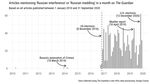
Responding to Alleged Russian Interference by Focusing on the Vulnerabilities That Make It Possible
Based on a media analysis of mainstream Western media, this chapter defines ‘Russian meddling’ as a distinct phenomenon that emerged at …
Russian Meddling in Democratic Processes in Europe and the US
In recent years, the issue of Russian meddling and Russian interference have prominently entered the public and political debate in …
Russia hacked: problematic sources for insights on conflicts in Ukraine and the South Caucasus
In recent years, high-level leaks and hacks have featured prominently in media reporting. Russia has been repeatedly blamed for carrying out cyber-attacks against a variety of actors in Western countries, including the US Democratic party and then-presidential candidate Emmanuel Macron in France. However, Russian government actors have themselves been repeatedly hacked in recent years, including by alleged Ukrainian hacker groups and others (e.g. #SurkovLeaks). People associated with the de facto authorities in the Donbas region have also been hacked.
Responding to alleged Russian interference by focusing on the vulnerabilities that make it possible
In recent years, the legitimacy of electoral processes in Western democracies has been repeatedly put into question due to alleged …